Seasonal Enjoyment: Best Ways to Use Your Sunroom or 3-Season Room Throughout the Year
November in the Triangle brings crisp mornings, early sunsets, and the perfect excuse to retreat to a bright, protected space. If you’re weighing a sunroom against a 3-season room/screen porch, here’s how each one shines across Raleigh-Durham’s changing weather—plus ideas to get the most comfort from fall through summer.
Sunroom vs. 3-Season Room: What’s the Difference?
A sunroom is a fully enclosed room with insulated walls, energy-efficient windows, and heating/cooling integration (or a dedicated mini-split). It feels like interior living space with panoramic light.
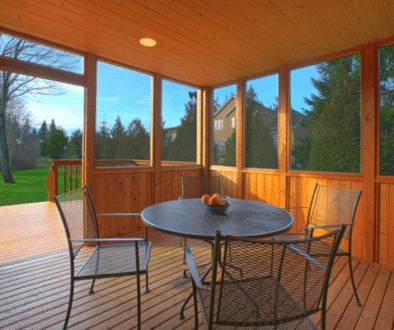
A 3-season room—often a screen porch with interchangeable panels or vinyl drops—keeps you close to fresh air while blocking insects, leaves, and much of the pollen. It typically isn’t tied to central HVAC, relying on ventilation, fans, and portable heat when needed.
How They Perform in Triangle Weather
- Late Fall & Winter (now through February):
Sunrooms excel as a daily retreat—morning coffee, reading nook, even a plant haven—thanks to insulation and temperature control. A 3-season space is still usable on mild days if you add clear vinyl panels, wind-smart screening, and infrared heaters for short, cozy gatherings. - Spring:
Raleigh-Durham’s famous pollen can be tough on open porches. Sunrooms keep the mess outside; quick vacuum, done. A 3-season room with pollen-resistant screens and easily removable panels helps you enjoy the breeze without constant scrubbing. - Summer:
Sunrooms with low-E glass, solar shades, and a mini-split stay comfortable during heat waves. 3-season rooms win on ventilation—pair ceiling fans with shade pergola elements or roll-down screens to tame direct sun.
Energy Efficiency: Where Each Option Wins
- Sunrooms deliver the best thermal performance. Upgraded glazing (low-E, argon fill), tight envelopes, and right-sized HVAC or a mini-split keep temperatures stable and utility costs predictable.
- 3-season rooms conserve energy by operating “as needed.” On pleasant days, open the space and enjoy free ventilation; in cooler months, spot-heat only when you’re using it.
Cost & Complexity Considerations
- Sunrooms typically require a higher investment due to foundations, insulation, electrical, and potential HVAC. The payoff is four-season usability and strong long-term appeal.
- 3-season rooms (screen porches with upgrade options) are generally more budget-friendly and faster to build. Add-ons like vinyl panels, motorized screens, and heaters stretch the usable calendar without moving into full addition territory.
Lifestyle Fit: How You’ll Use It Most
- Choose a sunroom if you want a true extension of your home year-round—WFH spot, kids’ play space, yoga corner, or an everyday sitting room with abundant light.
- Choose a 3-season room if you love the open-air vibe for weekend hangs, football watch parties, and laid-back dinners—especially from March through November—with simple upgrades for chillier nights.
A Quick Decision Guide
- Daily, four-season routine? Sunroom.
- Alfresco feel nine months a year? 3-season room.
- Top thermal comfort and resale signal? Sunroom.
- Lower upfront cost with smart seasonal add-ons? 3-season room.
Ready to Enjoy Your Space in Every Season?
Bright Comfort, Built for Triangle Weather
Whether you’re picturing a climate-controlled sunroom or a breezy 3-season retreat with panels and heaters, Jam Carolina Exteriors can tailor the design, glass, screening, and finishes to match how you live—this fall and beyond. With thoughtful materials and expert craftsmanship, you’ll gain a light-filled room for quiet mornings, game-day gatherings, and everything in between. Call (919) 804-8689 for a free consultation, and let’s plan a sunroom or 3-season room that keeps you comfortable across Raleigh-Durham’s seasons.